The roof is the culmination of the entire building, giving it its final shape. It consists of a supporting structure and a coating that protects against atmospheric influences and heat loss. What raw materials is it made from? What are the characteristics of individual materials? Dispelling doubts!
Roof truss - what is it?
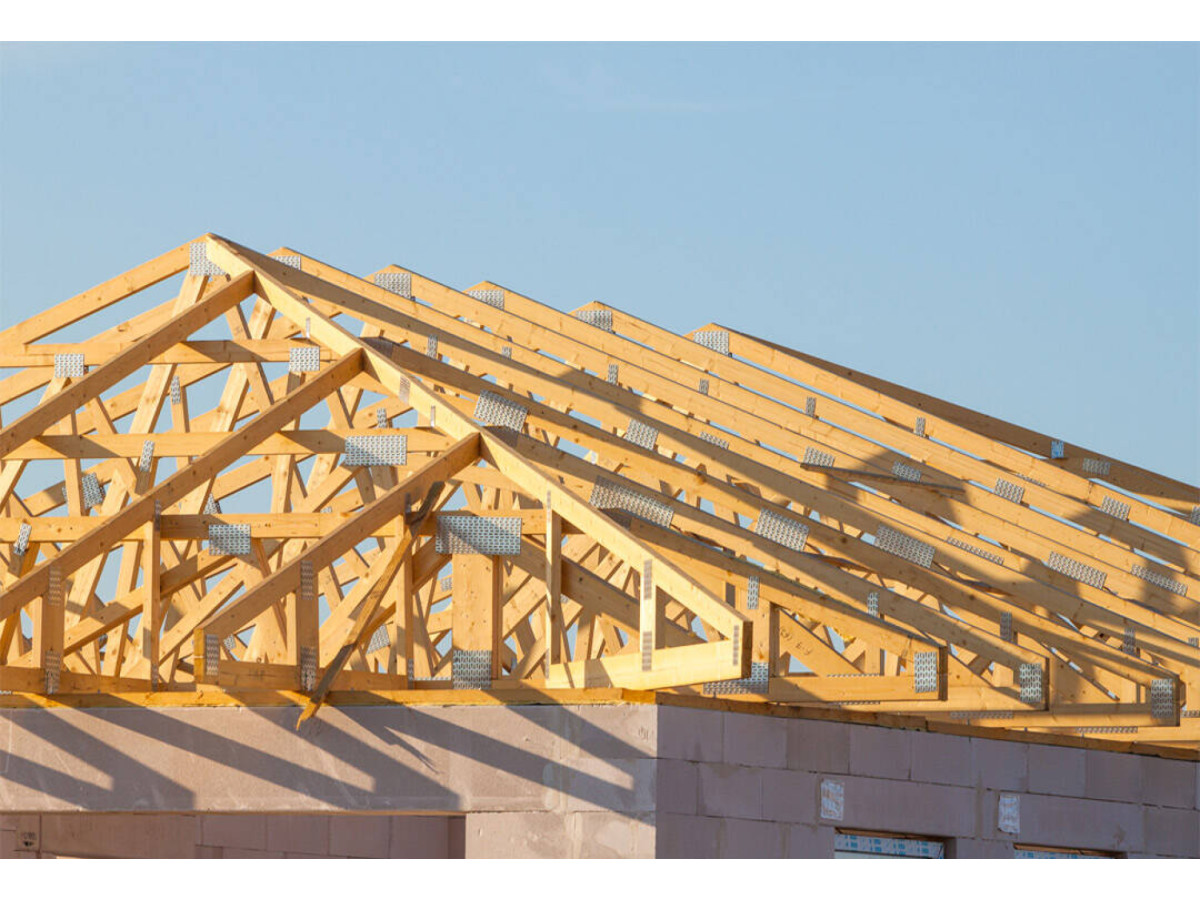
Roof truss is a wooden structure consisting of rafters, beams, walls, purlins, transoms, columns, cleats and shock absorbers that allows you to transfer the own weight of the structure and the weight of the roofing covering to the roof walls. building. It affects the strength and shape of the entire building.
Timber roofing structures are divided into traditional structures and modern prefabricated structures.
Traditional roof truss - what is worth knowing about it?
In the case of traditional roof trusses, the carpentry work is carried out on the construction site. The wood needed to build a traditional roof truss is usually obtained from a sawmill. The most commonly used types of wood:
Sometimes wood species such as oak and larch are also used (however, these solutions are more expensive). It is important to choose the appropriate class of wood.
The individual elements of such a roofing structure are cut to size, then adjusted and connected using carpentry joints, which takes place on the construction site. Constructing a roof truss in the traditional way is a labor-intensive and tedious job that requires contractors to have a lot of experience, in-depth knowledge and precision. Building a roof truss the traditional way also takes longer than a prefabricated truss. However, this is the solution that investors often choose. Another strength of this solution is its lower price compared to a prefabricated truss.
How to choose a roof truss for a house project?
A roof is much more than protection from the weather! It is a key element of a building's design and can greatly influence the appearance of the entire building. When choosing a roof truss, the following factors must be taken into account:
- manufacturing and installation process
- the choice of construction type depends on the size of the building
- price difference between traditional and prefabricated roof trusses.
Before determining the roof style for your future home, be sure to first consult with professionals who will give you important advice on this matter. Whether your building project involves expanding your current home or adapting it to the needs of building a new home, choosing a roof shape is not just a matter of your creativity. Before carefully deciding on the roof style and choosing materials, you should first familiarize yourself with the city planning rules.
Types of traditional roof trusses - what are they?
The most commonly used structures include: rafter roof trusses, rafter roof trusses, and purlin roof trusses.
Roof truss
A rafter is one of a series of sloping structural members, such as wood beams, that extend from the ridge or hip to the wall slab, eave perimeter, or eaves and are designed to support shingles, roof sheathing, and their associated loads. It does not exceed 6.0 m, the roof slope is 40-60°. The main load-bearing element is a pair of rafters connected to each other at the ridge, with a maximum length of 4.5 m, at a distance of 80-120 cm from each other.
Rafter-transom roof truss
The roof truss truss has the great advantage that it is relatively easy to manufacture and is less expensive than other types of roofing structures. Its design is somewhat reminiscent of a rafter roof, but a horizontal structural element has been added that significantly stabilizes the entire roof - a collar beam. The collar beam is usually placed in the middle of the rafters or above, its most important task is to connect and stiffen both rafters. This method is used when the distance between the outer walls is from 7 to 9 m. The length of a single rafter beam in such a roof is more than 4.5 m. The support of a roll roof is usually located ⅔ of the rafter span, counting from the bottom of the roof. The lower part under the collar beam is usually 4.5 m, and the upper part is up to 2.7 m. The typical slope of a pitched roof is from 35° to 60°.
Truss from a purlin
Purlin roofing is easy to construct and adapts to buildings with complex projections, which is why this type of construction is widely used in construction. The intermediate purlins rest on the columns and support the rafters. The distance between the pillars is 3.0-5.0 m. The pincers cover the rafters and pillars on both sides and are connected to them with nails or screws. The connection of the pliers to the rafters is made using a dovetail.
Prefabricated roof truss - what is worth knowing about it?
Prefabricated roof trusses are manufactured reliably and accurately in specialized facilities. They are made from certified high quality wood. Nowadays, the entire production process of prefabricated roofs is computer controlled. To make a truss in such an automated plant, all the necessary data must be entered into the appropriate program in accordance with a pre-prepared project.
As mentioned above, computer aided design tools allow you to create a wide range of truss models in sizes tailored to each project. Moreover, prefabrication allows contractors to quickly produce wood structures with complex geometries.
For the production of trusses, the following products available in our warehouses are most often used:
timber.
Usually such construction is carried out efficiently and quickly. Installation of a prefabricated roof usually takes up to 3-4 days. However, when planning the construction of a prefabricated roof, it should be taken into account that the structure will be supplied in pre-prepared elements. Therefore, you will need a crane to install the prefabricated roof truss. It's also worth noting that this setup is a more expensive investment than a traditional truss setup.
Prefabricated roof trusses can be custom designed using advanced architectural and engineering software to perfectly fit building contractors' designs. This is why the accuracy of the information collected by the manufacturer is so important.
What else is worth knowing about prefabricated roof trusses?
Prefabricated wood roof trusses have many benefits that contribute to their popularity in the construction and renovation industry.
- Easy installation of the roof truss. Roof trusses are easy to construct because they can be easily moved by crane and the tasks involved in installing them are simple and repeatable. In fact, two people are usually enough to install roof trusses.
- High level of immunity. The triangulation concept provides the roof trusses with a very high level of resistance to various types of loads.
- Impressive range. Roof trusses can reach spans of more than 24 m, allowing the creation of large interior spaces without columns or load-bearing walls.
- Lightness. Roof trusses weigh between 0.04 and 0.07 kN/m. Their low weight not only makes them easier to move, but also helps reduce seismic loads in buildings with roof trusses.
- Save. When planning the use of trusses at the initial stage of the project, due to their relatively low weight, a smaller section of the walls can be used, which relieves the load on the building foundations. Foundations that bear less load and thinner and lighter load-bearing walls allow you to save on building materials for their construction.
- Extremely accurate measurements. The computer-designed design of the roof trusses and the latest equipment used in their production ensure consistent quality of products, the dimensions of which are accurate down to the millimeter.
- Low environmental impact. The structural wood used to produce roof trusses - C24 structural timber or KVH structural timber - is the only renewable building material. In addition, wood sequesters the carbon accumulated during its growth.
- Short production times and fast assembly. Weatherproof factory production using automated tools allows roof truss suppliers to achieve extremely short production times, even with large order volumes.
The prefabricated roof structure significantly reduces assembly time on site, so we can carry it out even in winter and professionally protect the building from the weather.
Is the truss installed correctly? How to check?
The construction manager must check the correct installation of the roof truss. However, having a roof strap made correctly from the very beginning by professionals will be much easier and cheaper than having to repair, disassemble and redo it later if any irregularities are detected.
How much does a roof truss cost? Prices for roof trusses
The
Price of a truss, as well as the cost of constructing a structure, is always determined individually. Such a project
requires the involvement of a qualified specialist. If you are interested in purchasing timber for your roof structure, please contact us and request a price quote. An estimate is made based on the provided list of wood that should be included in the construction project.
Difference between sawmill wood and certified wood
In the case of traditional roofing structures, wet wood is most often used. This wood has a rough surface, which requires additional impregnation against fungi and pests. Wood with high humidity and an unplaned surface is more susceptible to mold and fungi and prevents unwanted pests from penetrating deep into the wood. Rough surfaces are also more susceptible to fire. Even after the structure is installed, such wood may curl, warp and crack as it dries, and these irregularities may be visible on the finished roof.
To avoid such surprises, traditional structures are increasingly made from certified kiln-dried planed wood, which is already the norm in the West. It is also worth noting that in the construction, for example, of public buildings, only certified wood is used.
Certified wood must meet certain standards. The drying process destroys pests and fungi that may be present in the wood. However, planing the surface closes the pores in the wood, which makes the wood more resistant to mold and mildew, and also makes it more difficult for pests that feed on the wood to nest. The smooth surface of wood also increases its fire resistance. Thanks to this, you can avoid protecting the wood with impregnations.
According to manufacturers, wood preservatives are harmful to humans, but only until they are absorbed into the wood and dry out. After a certain period of time they are non-toxic and pose no threat.