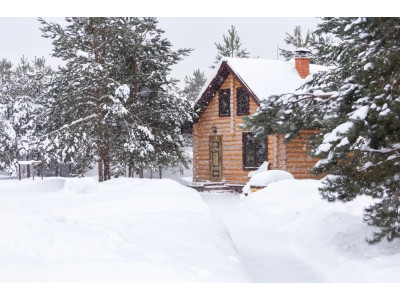
Construction of a wooden house is a serious undertaking. When making these investments, investors must make many important decisions. One of them is the choice of suitable material for insulating the building.
Until recently, the most popular insulation material was polystyrene foam. Today, mineral wool is very popular. No wonder - it has excellent thermal insulation parameters. A distinctive feature is high fire resistance. How to insulate a wooden house with mineral wool? What other characteristics does mineral wool have? Why not insulate your house with polystyrene foam? We will answer these and many other questions in the guide below!
Mineral wool - how is it made?
Mineral wool is a popular insulation material with universal applications. It comes in two types - glass and stone. Each of them is created differently and has different technical parameters. Both types of wool are good for insulating a wooden house, although glass wool is more often chosen. This is because it is definitely more efficient.- Glass wool is made from cullet and quartz sand with the addition of gabbro, dolomite or limestone. The ingredients are melted in the oven at a temperature of 1000 degrees Celsius. The selected material is then subjected to a cooking process.
- Stone mineral wool, as the name suggests, is made from rocks of volcanic origin. These include: basalt, dolomite, gabbro, slag and coke. Compared to glass wool, mineral wool has greater rigidity and density, which makes it more resistant to damage. It can be successfully used to insulate a house or attic.
Properties of mineral wool
Mineral wool, regardless of the production method, has excellent technical properties.- This material has exceptional fire resistance. This is especially important in the case of wooden houses, as they are most susceptible to fire. Mineral wool is an effective fire barrier. Moreover, when exposed to very high temperatures, it does not emit smoke or other harmful substances.
- Another important advantage of mineral wool is its high moisture transfer coefficient. There are no problems with the free penetration of water vapor, which reduces the risk of mold and mildew forming on the walls.
- Acoustic properties are also important. Mineral wool has a high ability to dampen sounds coming from outside. It is worth choosing this material, especially if we live in a noisy area.
- Mineral wool also has very good insulating properties. This is a key parameter that you need to pay attention to when choosing a material for insulating a facade or attic. The heat transfer coefficient can rangefrom 0.031 to 0.040 W/mK.
Insulation of a wooden house - outside or inside?
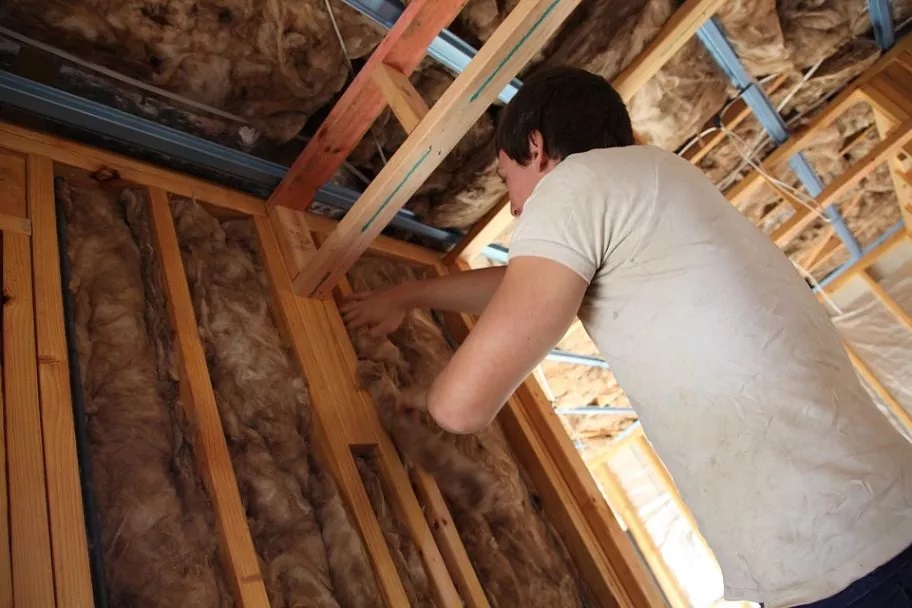
A wooden house can be insulated both outside and inside. It all depends on the technology used to construct the building. Houses built using frame technology can be insulated from the inside. Insulation material is installed on the inside of the walls. You should also remember to spread it on the ceilings. Thanks to this, we will achieve maximum thermal comfort in the premises. Outside, you should use vapor barrier foil, which protects from wind and prevents the development of mold and mildew. In such a situation, we will be sure that the structure will not be damaged over time. The reasons for choosing mineral wool are, of course, non-combustibility, fire resistance, strength and flexibility. Most owners of wooden houses decide toinsulate the building from the outside. This solution is best suited for structures built using traditional technology. Considering the weather conditions in our country, insulating the outside of houses is the most profitable solution. External insulation, contrary to appearance, is a very simple procedure. Any investor with even a modicum of knowledge and skills can implement such a project independently. We suggest using mineral wool to insulate the building from the outside, since it is more rigid. Work should begin with preparing the base and cleaning the slabs. Then you need to attach wooden beam in the designated places. This should be done with particular precision, since even small holes can cause cold bridges. The final stage includes thorough sanding of the boards and application of reinforcing mortar.Methods of insulating a wooden house
If we want to insulate a wooden house with mineral wool, we can use two methods - light dry or wet. Each of them has its own advantages.Easy dry method
The light dry method is increasingly used by investors to insulate wooden houses. No wonder - it's very simple and fast. It can be easily handled by a person who does not have much experience in construction. Of course, if we are unable to do it, we can entrust this task to specialists.- The easy method involves covering the walls of the building with mineral wool and fastening it to the ground with special fasteners (screws, nails, dowels).
- The slabs used for insulation should have a thickness of 10-15 cm and be located at appropriate distances.
- The biggest advantage of this method is the ability to carry out work regardless of weather conditions, since we do not need to use any adhesives or solutions.
- The dry method is well suited for both new houses and old ones that require modernization work.
Wet method
Insulating a wooden house using the light wet method is a complex and time-consuming process. It involvesattaching subsequent layers of insulation to the wall of the building using special glue.- The surface of the boards is covered with thin-layer plaster diluted with water.
- The speed of implementation of such a project depends on the weather.
- It is best to insulate a house using the wet method when it is dry and sunny outside and the temperature is 10-25 degrees Celsius.
- Regardless of weather conditions, it is easy to make mistakes that can lead to insufficient insulation of the building and, as a result, heat loss for investors.
- The wet method requires professional knowledge and skills - it must be performed by experienced plasterers.