
OSB board is a universal building material and is widely used in construction. This is because OSB board has technical characteristics that ensure strength, reliability, durability, lightness and aesthetics of structures at an affordable price. Let's talk about this in more detail.
What is OSB board
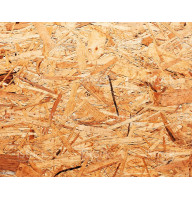
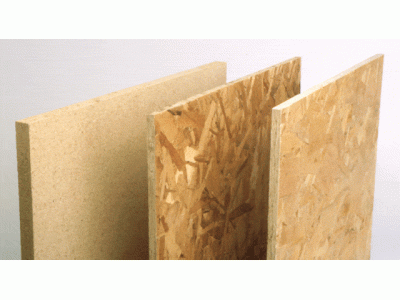
The technical characteristics of an OSB board are determined by the method of its manufacture. Wood chips of a flat structure with the addition of waterproof resins and other components such as boric acid, formaldehyde, phenols, urea are pressed at high temperature. The chips are oriented in the slab layer by layer: in the outer layers along the length of the panel, and in the inner layers - perpendicularly. Hence the name of the board - OSB (oriented strand board), which means oriented strand board. Layering makes the slab stronger and more elastic.
For production, chips from pine, spruce, and aspen are used, which are split along the wood fibers. This also affects the OSB characteristics.
Classes of OSB boards
The characteristics of the OSB boards produced are not the same and the quality of the material is divided into 4 classes.
- The first group includes slabs with the lowest moisture resistance. Therefore, their scope of application can only be dry rooms. Products of this class cannot withstand heavy loads.
- Second class material can withstand significant loads, but are also susceptible to moisture.
- Class 3 features provide the most functionality. This material is quite durable even in wet conditions.
- The fourth class is assigned to products of the highest quality that can cope with high loads in any conditions. Its disadvantage is its high cost.
Main properties
- One of the important indicators of the mechanical properties of OSB boards is flexural strength. Products of different classes and different thicknesses have different values of this parameter. For materials according to the European standard EN 300, the flexural strength along the main axis is from 16 to 30 N/mm2, and the flexural strength along the lateral axis is from 8 to 16 N/mm2.
- The presence of wood in the composition cannot but affect moisture resistance and moisture permeability. If water gets on the slab, swelling and loss of strength occur. The degree of swelling for different classes ranges from 12% for the fourth class and 25% for the first.
- A characteristic such as vapor permeability shows the ability to resist moisture penetration. The vapor permeability coefficient is 0.0031 mg/(m.h.Pa), which is identical to this indicator for foam glass and linoleum.
- Another OSB characteristic is the ability to hold fasteners. She's tall enough. Fasteners one centimeter from the edge of the slab will be reliable. Although certain requirements must be observed, namely: the fasteners must be at least 50 mm and exceed the thickness of the OSB board by more than 2.5 times, and the thickness of the brackets must be more than 1.53 mm.
- Another property is paintability and gluing. Any adhesives and paints for natural wood are suitable for this.
Whatever the size of the OSB, it is easy to saw. In addition, the plate has the properties of being easy to grind, drill, turn, and milling.
An important characteristic is its high biological resistance to mold. But for long-term operation in wet conditions, an additional moisture-proof coating is required.
The material is manufactured in many countries where their own standards exist. Therefore, the dimensions of the OSB sheet are not the same. On the market, most often the sizes of OSB sheets are as follows:
- 1220*2440 mm;
- 1250*2500 mm;
- 1250*2800 mm;
- 2000*3125 mm.
Depending on the thickness, the weight of an OSB sheet varies. This is important to consider during transportation and when calculating construction costs. With a density of 650 kg/m³ and a sheet size of 2500×1250 mm (3.125 m²), the weight is:
-
6 mm — weight 12.2 kg
-
9 mm — weight 18.4 kg
-
11 mm — weight 22.5 kg
-
15 mm — weight 30.7 kg
-
18 mm — weight 36.8 kg
-
22 mm — weight 45.0 kg
The largest weight of an OSB board with a size of 1250*2500 mm and a thickness of 22 mm is 44.7 kg.
We hope that the above characteristics will help when choosing a material.